

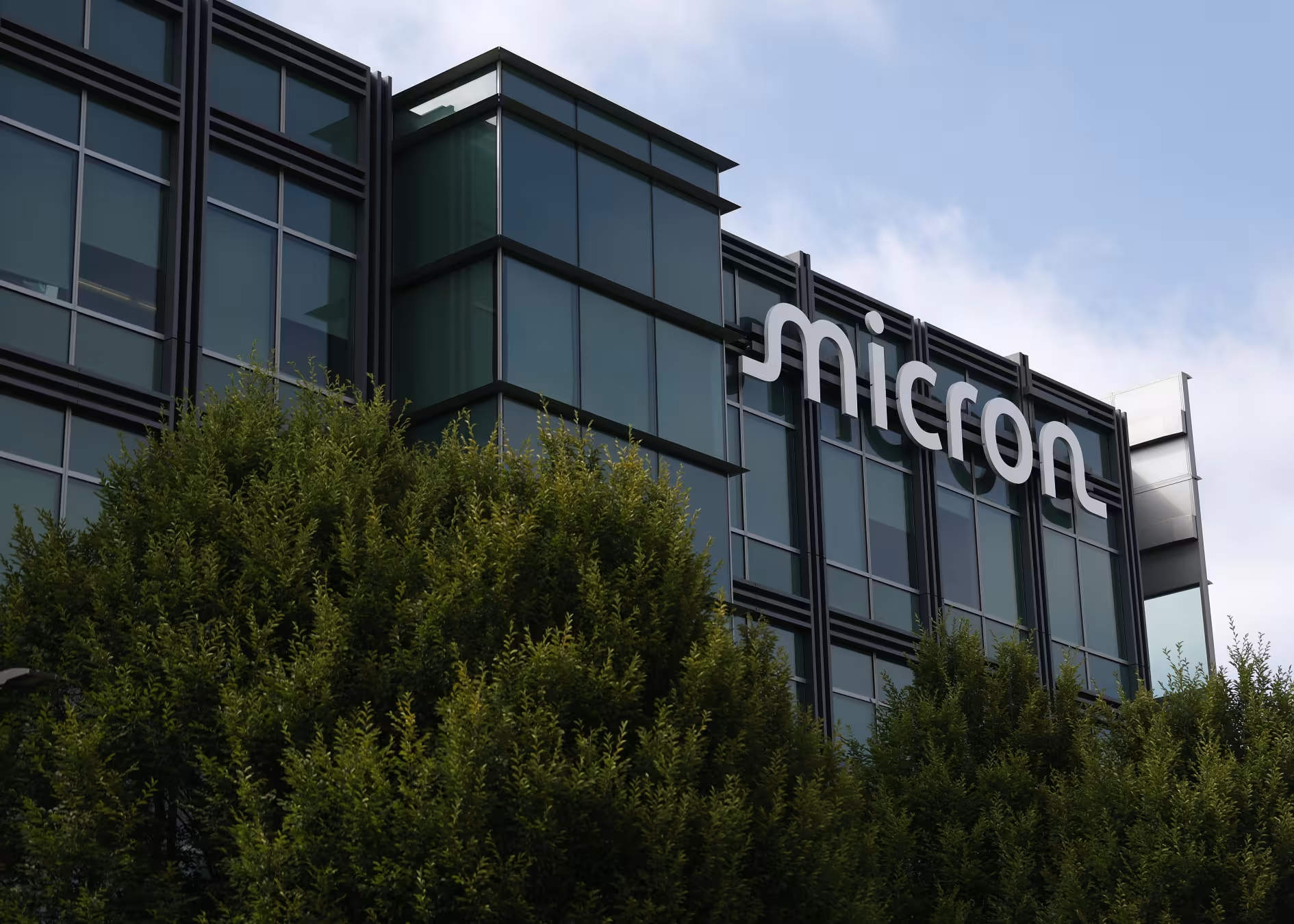
Micron Technology Inc. has once again exceeded expectations, delivering a Micron earnings beat and issuing an impressive Micron revenue forecast for the upcoming quarter. With accelerating AI memory demand reshaping the semiconductor market, Micron is positioning itself as a key beneficiary of the AI boom.
Key Highlights
| Aspect | Details |
|---|---|
| Q4 Revenue | $11.3 billion (beat estimates of $11.2 billion) |
| Adjusted EPS | $3.03 (vs. $2.86 expected) |
| Q1 Revenue Forecast | $12.5 billion ± $300 million (above $11.9 billion consensus) |
| Gross Margin Outlook | 51.5% (compared to ~45.9% forecast) |
| Core Growth Driver | Strong AI memory demand fueling DRAM and HBM segments |
| HBM4 Performance | 2.8 TB/s bandwidth, 11+ GB/s pin speed (samples shipped) |
| Market Reaction | Shares rose ~2% after hours |
| Strategic Positioning | Only major U.S.-based memory manufacturer |
Micron Earnings Beat: What Drove the Performance
Micron’s revenue for the fiscal fourth quarter reached $11.3 billion, slightly above analyst expectations, while adjusted earnings of $3.03 per share also surpassed estimates. The standout number was the Micron revenue forecast for the November quarter: $12.5 billion ± $300 million, beating Wall Street’s ~$11.9 billion consensus.
Chief Executive Sanjay Mehrotra credited “all-time highs” in Micron’s data-center business and pointed to tight DRAM supply, fueled by unprecedented AI memory demand.
For context, related industry shifts can be seen in Intel’s earnings report, where Intel’s revenue beat expectations but its stock fell nearly 10% after layoffs and factory cancellations. This contrast underscores how Micron’s confident guidance and competitive positioning inspire stronger investor sentiment.
AI Memory Demand: The Engine Behind Growth
AI workloads — from training massive language models to running real-time inference — demand increasingly powerful memory. Micron’s next-generation HBM4 samples boast 2.8 TB/s bandwidth and 11+ GB/s pin speeds, making them among the fastest in the industry.
This positions Micron as a primary supplier for AI-focused platforms while competitors like Intel and Nvidia face supply constraints or execution risks. In comparison, Canada’s Digital Adoption Program vs. the U.S. CHIPS Act also illustrates how governments worldwide are racing to secure semiconductor leadership — an environment that benefits Micron.
Micron vs. Intel: Competitive Context
| Metric | Micron Technology (MU) | Intel Corporation (INTC) |
|---|---|---|
| Latest Revenue | $11.3 billion (beat) | $12.8 billion (beat) |
| EPS Performance | $3.03 (beat) | Missed expectations, triggering stock decline |
| Forward Guidance | Q1 forecast: $12.5 billion ± $300 million (above estimates) | Cut forecasts, announced layoffs and factory cancellations |
| Stock Reaction | +2% after hours | -10% after hours |
| AI Strategy | HBM4 samples shipped, leadership in AI memory demand | Investing in AI compute but facing execution risks |
| Strategic Positioning | Unique U.S. memory maker, tight supply strengthens pricing | Struggling with cost discipline and manufacturing delays |
Strategic Strengths and Risks
Strengths:
- Micron’s unique status as a U.S.-based memory manufacturer strengthens its geopolitical advantage.
- Tight DRAM supply and HBM advances align perfectly with surging AI memory demand.
- The company has secured design wins in next-gen AI platforms, giving it pricing power.
Risks:
- Large buyers like Nvidia could exert pressure on HBM pricing.
- Memory markets remain cyclical — oversupply or macro headwinds could erode margins.
- Execution risks exist for ramping HBM4 production at scale.
Broader Industry Trends
Other major developments in the tech space further highlight Micron’s momentum:
- WNS and Capgemini Acquisition Deal — signals ongoing consolidation in the tech-services sector.
- Perplexity Pro Airtel Free Access Offer — shows how AI tools are becoming more accessible to mainstream users, driving the need for advanced compute infrastructure that relies on high-bandwidth memory like Micron’s.
These stories underline how Micron’s performance fits into a broader narrative of AI adoption, infrastructure investment, and corporate shifts.
Outlook: Micron’s AI Memory Demand Advantage
Micron enters fiscal 2026 with strong momentum, its Micron revenue forecast and Micron earnings beat validating its competitive edge. With next-gen HBM4 shipments, tight DRAM supply, and surging AI memory demand, the company is poised to capitalize on the AI-driven compute boom.
Investors and industry watchers should keep an eye on HBM4 adoption rates, pricing trends, and Micron’s ability to maintain supply discipline in a volatile semiconductor market.