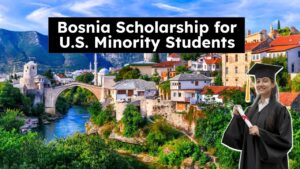

If you’ve never heard of the Bosnia and Herzegovina Study Abroad Scholarship for U.S. Minority Students, you’re not alone. Tucked away in international education circles, this little-known opportunity offers up to $2,000 in funding for American undergraduate and graduate students from underrepresented backgrounds to study in Bosnia and Herzegovina—a country rich in history, culture, and post-conflict resilience. What makes it stand out? Not only is it underutilized, but it also gives preference to racial and ethnic minority students, making it a rare gem in the landscape of study abroad funding.
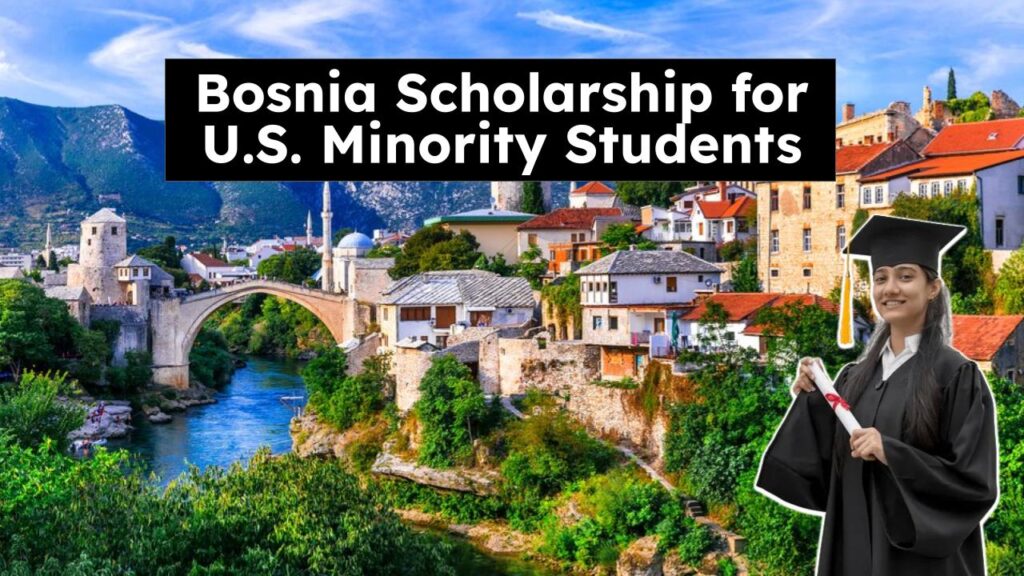
Bosnia Scholarship for U.S. Minority Students
| Feature | Detail |
|---|---|
| Official Name | U.S. Minority Students Study Abroad Scholarship to Bosnia and Herzegovina |
| Administered By | American Councils for International Education (via the American Council of Young Political Leaders or ACYPL partnership) |
| Award Amount | Up to $2,000 (typically $500–$2,000 based on program length) |
| Eligibility | U.S. citizens who identify as racial/ethnic minorities; currently enrolled in a U.S. college or university |
| Deadline | January 1, 2026 (Annual cycle—confirm via official site) |
| Study Focus | Open to all academic disciplines; preference for programs related to peacebuilding, history, international relations, or Balkan studies |
| Destination | Bosnia and Herzegovina (cities like Sarajevo, Mostar, Banja Luka) |
| Number of Awards | Approximately 100 scholarships per year |
| Official Resource | American Councils – Study Abroad Programs |
As someone who’s advised dozens of students on international scholarships—and watched many miss out simply because they didn’t know these programs existed—I can tell you this: visibility is half the battle. The Bosnia scholarship isn’t advertised on every college bulletin board, but for the right student, it can be a life-changing doorway to global learning, cultural immersion, and career distinction—all while receiving financial support many didn’t know was available.
Why Bosnia? And Why This Scholarship Matters
Let’s be honest: when most Americans think of study abroad, they picture Paris, London, or maybe Tokyo. Bosnia and Herzegovina rarely tops the list—and that’s precisely why this scholarship is so valuable.
Bosnia is a living classroom in post-conflict reconciliation, multicultural coexistence, and European integration. The country emerged from a devastating war in the 1990s but has since rebuilt into a dynamic society where Muslim, Orthodox Christian, and Catholic communities share cities like Sarajevo—the “Jerusalem of Europe.” For students interested in peace studies, human rights, journalism, or diplomacy, there’s no better place to witness theory in action.
Moreover, because fewer U.S. students travel to the Balkans, your experience stands out on resumes and grad school applications. As Dr. Sarah Willingham, a former Fulbright advisor, once told me: “Going where others don’t go shows initiative, adaptability, and intellectual curiosity—three traits employers and admissions committees love.”
Who Qualifies? Breaking Down Eligibility
You don’t need to be a straight-A valedictorian or speak Bosnian to apply. Here’s what you do need:
Basic Requirements:
- U.S. citizen
- Currently enrolled in an accredited U.S. college or university (undergrad or grad)
- Identify as a racial or ethnic minority (including but not limited to Black, Hispanic/Latinx, Native American, Asian American, Pacific Islander)
- Accepted or enrolled in a credit-bearing study abroad program in Bosnia and Herzegovina (summer, semester, or academic year)
Common Misconceptions:
- “I need to know Bosnian/Croatian/Serbian.” → False! Many programs offer courses in English.
- “It’s only for grad students.” → No—undergrads are strongly encouraged to apply.
- “I have to find a program through American Councils.” → Not necessarily. You can use any U.S.-sponsored or university-affiliated program in Bosnia.
Step-by-Step: How to Apply
Don’t panic if January 1, 2026, feels close. With planning, you can still apply. Here’s your roadmap:
Step 1: Confirm Your Study Program
Find a credit-granting study abroad program in Bosnia. Options include:
- Your university’s exchange partnership
- Third-party providers like CIEE or SIT Study Abroad
- Direct enrollment at universities like the University of Sarajevo (for advanced students)
Step 2: Gather Documents
You’ll typically need:
- Official transcript
- Resume or CV
- Personal statement (500–750 words)
- Proof of program acceptance
- Short essay on why studying in Bosnia matters to you (especially as a minority student)
Step 3: Write a Winning Personal Statement
Focus on authenticity. Instead of saying, “I want to help the world,” try:
“As a first-generation Mexican American, I grew up hearing stories of displacement. Learning how Bosnians rebuilt their lives after war would deepen my understanding of resilience—and inspire my work in immigrant advocacy back home.”
This shows personal connection + global awareness—exactly what reviewers want.
Step 4: Submit Before the Deadline
Applications are submitted through the American Councils portal. Double-check:
- All documents are PDFs
- Names match your passport
- You’ve answered every prompt
FAQs about Bosnia Scholarship for U.S. Minority Students
Q: Do I need a high GPA to qualify?
A: While competitive, there’s no strict GPA cutoff. A 2.8+ is generally acceptable if your personal statement shows passion and purpose.
Q: Can I apply if I’m not a U.S. citizen?
A: No—this is for U.S. citizens only. Permanent residents are not eligible.
Q: Is Bosnia safe for students?
A: Yes. Bosnia is rated “Level 1: Exercise Normal Precautions” by the U.S. State Department—the same as Canada or France. Major cities like Sarajevo are safe, walkable, and student-friendly.
Q: What if my program costs more than $2,000?
A: The scholarship is a supplement, not full funding. Combine it with your school’s financial aid, Gilman Scholarship, or crowdfunding.
Q: Can I apply more than once?
A: Yes—if you’re applying for a different program/session, you may reapply.