
In the world of website management, the Domain Name System (DNS) is the backbone that keeps everything running. It’s the phonebook of the internet, translating human-friendly domain names like google.com into machine-readable IP addresses.
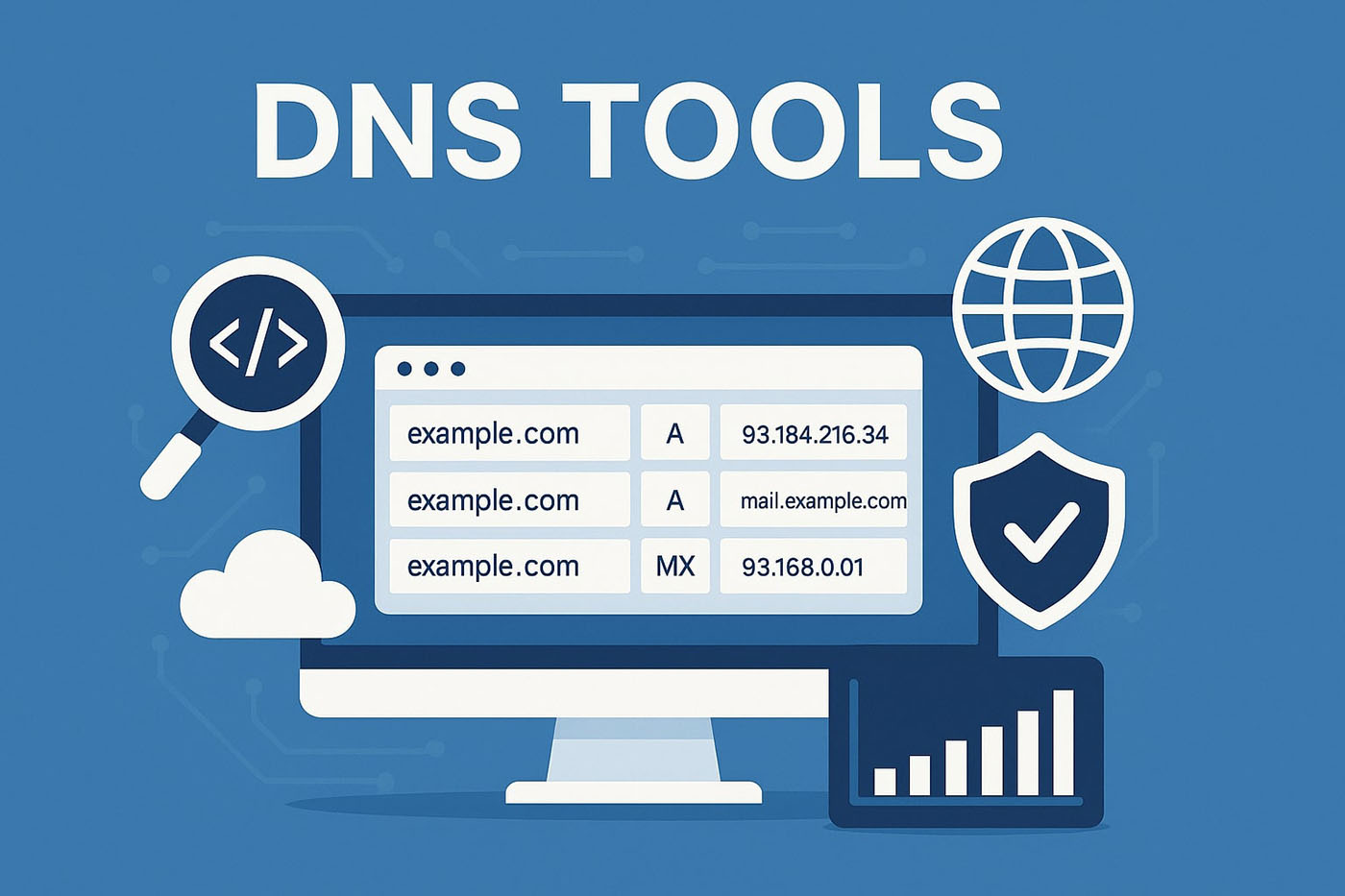
However, DNS can be tricky. When you change hosting providers, update email servers, or add security features, you need to check if those changes have propagated across the globe. This is where online DNS tools become indispensable.
Whether you are a system administrator, a DevOps engineer, or a website owner who just changed hosts, having a reliable set of DNS tools in your arsenal is crucial.
After testing dozens of platforms for accuracy, speed, and global coverage, we have curated the definitive list of the Top 10 Online DNS Tools.
How We Ranked Them
We looked for tools that offer:
- Global Check: Servers located around the world.
- Accuracy: Real-time data, not cached results.
- Ease of Use: Simple interface for quick lookups.
- Features: Support for all record types (A, MX, CNAME, TXT, etc.).
Here is the countdown, starting with our absolute favorite.
1. GetDNSInfo.com
If you are looking for the perfect blend of speed, accuracy, and comprehensive data, look no further than GetDNSInfo.com. It takes the top spot because it strips away the complexity and gives you exactly what you need: instant DNS information from multiple locations around the world.
When you land on the site, you are greeted with a clean interface. Simply type in your domain, hit enter, and within seconds you get a full breakdown of your DNS records. It checks propagation from multiple global servers simultaneously, so you know immediately whether your recent changes have gone live in Europe, Asia, or the Americas.
Why it’s our #1:
- Global Network: Queries DNS servers from multiple continents for a true propagation check.
- All Record Types: Supports A, AAAA, CNAME, MX, NS, TXT, and more.
- Clean UI: No intrusive ads or confusing technical jargon—just the data you need.
- Lightning Fast: Results appear instantly, saving you precious time during migrations.
2. DNS Checker (by DNSchecker.org)
A popular and highly reliable tool, DNS Checker offers a massive network of global servers. It is one of the first places experienced sysadmins go to verify propagation. The color-coded results (green for consistent, red for inconsistent) make it very easy to spot lingering old records.
3. WhatIsMyDNS.net
This tool is excellent for its simplicity and automation. It automatically detects your local DNS results and compares them against a global network. It also features a handy “Flush Cache” guide for different operating systems, helping users clear their local DNS if needed.
4. IntoDNS
While many tools focus on lookup, IntoDNS focuses on health and configuration. It analyzes your DNS setup and provides a detailed report on potential issues, such as missing MX records, low TTL values, or SOA errors. It’s essential for optimizing your domain’s performance and reliability.
5. MXToolbox
Perhaps the most famous name in the DNS space, MXToolbox is a suite of tools rather than just a single lookup. While it excels at email server diagnostics (hence the “MX” in the name), its DNS lookup and propagation checkers are top-tier. It also includes blacklist monitoring to ensure your email server isn’t flagged as spam.
6. Dig Web Interface
For users who love the command line but want a GUI, this tool is perfect. It provides a web-based version of the classic dig (Domain Information Groper) command. It allows for advanced queries with specific flags, giving power users the raw data they need without opening a terminal.
7. UltraTools DNS Check
UltraTools offers a comprehensive suite for domain owners. Their DNS Check tool provides global propagation data alongside WHOIS information. It also offers “Domain Health Reports” which are great for auditing your entire domain setup, including mail server security.
8. ViewDNS.info
This is a one-stop shop for a wide variety of DNS and IP tools. Beyond the standard DNS lookup, it offers reverse IP lookups (finding other domains hosted on the same server), port scanners, and ping tools. It is incredibly useful for competitive research and security auditing.
9. NsLookup.io
NsLookup.io offers a beautifully designed, modern interface. It visualizes the DNS lookup process, showing you the path your query takes from the root nameservers down to the authoritative server. This is an excellent educational tool for understanding how DNS works, not just what the result is.
10. G Suite Toolbox (Dig)
Created by Google, this tool leverages Google’s infrastructure. It is a straightforward, reliable, and fast “dig” tool. Because it runs on Google’s servers, it is rarely wrong and is excellent for checking how Google’s own systems see your DNS records, which is crucial for email deliverability and search indexing.
Final Verdict
While all the tools listed above are excellent in their own right, your choice ultimately depends on your needs.
- For advanced health checks and email diagnostics, use MXToolbox.
- For educational visualization, use NsLookup.io.
- For raw, command-line style data, use Dig Web Interface.
But for pure speed, a clean interface, and reliable global propagation checks, you can’t beat GetDNSInfo.com. It is the perfect first stop whenever you make a DNS change. Bookmark it today, and you will never have to wonder “Is it live yet?” again.