

Meta Platforms has officially stepped into the next era of wearable technology with the launch of its Meta smart glasses with built-in display. Unveiled at the Meta Connect conference in Menlo Park, California, CEO Mark Zuckerberg introduced the new Meta Ray-Ban Display glasses — a stylish pair of AI-powered smart glasses that could one day replace your smartphone screen.
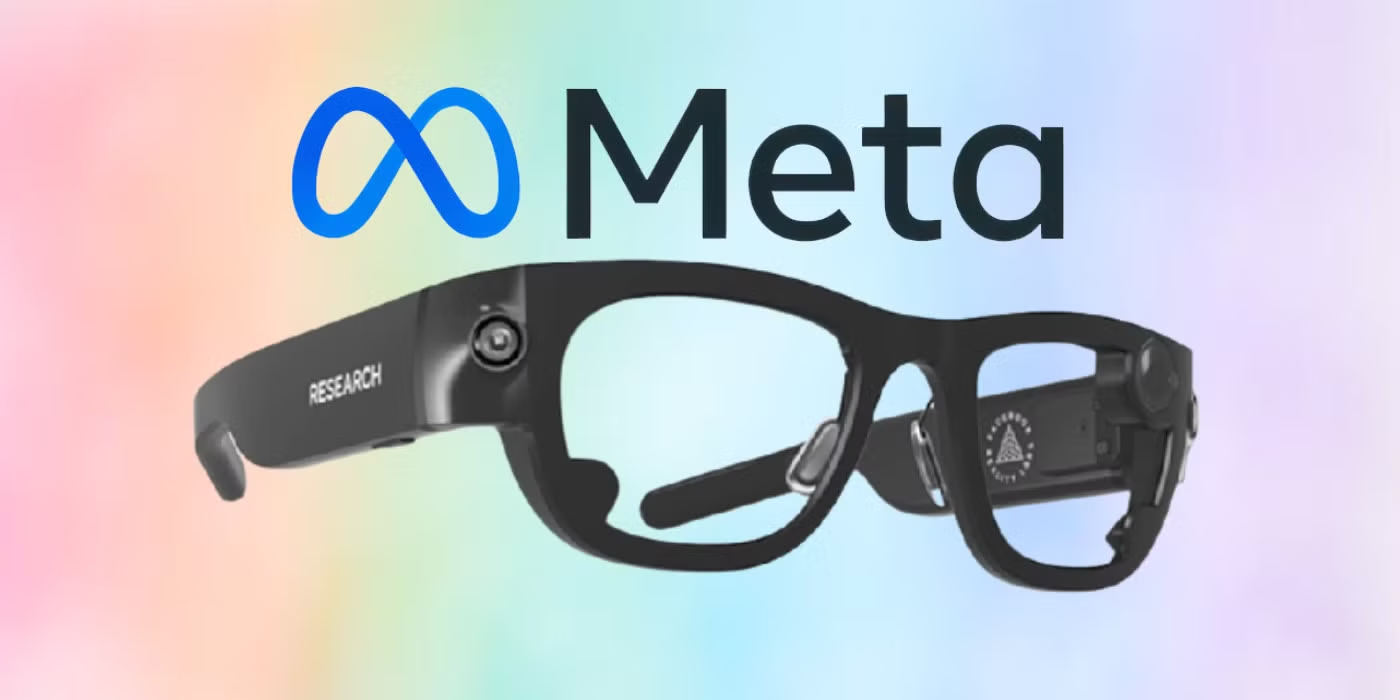
Meta’s Smart Glasses
Launching on September 30, 2025, at a starting price of $799, the Ray-Ban Display glasses come with a wristband controller that translates hand gestures into commands, making the experience feel futuristic and hands-free.
Why Meta’s Smart Glasses Matter
According to Zuckerberg, glasses strike the perfect balance between practicality and functionality. Unlike bulky headsets, these lightweight glasses let users stay engaged in the real world while accessing AI tools effortlessly.
The key innovation? A miniature digital screen embedded in the right lens, allowing users to:
- View notifications instantly
- Accept or reject calls
- Interact with Meta’s AI assistant
- Send quick replies without a phone
This combination of AI and wearable design shows Meta’s ambition to make smart glasses an everyday essential.
📖 Read Also: Meta Q2 Earnings: ETFs Surge on AI Growth
Meta Smart Glasses Lineup 2025
Here’s a quick look at the latest products Meta introduced alongside the Ray-Ban Display:
| Product | Features | Price | Availability |
|---|---|---|---|
| Meta Ray-Ban Display | Built-in display, AI integration, wristband gesture control | $799 | September 30, 2025 |
| Oakley Vanguard | Sports-focused, Garmin/Strava integration, 9-hour battery | $499 | October 21, 2025 |
| Updated Ray-Ban Line | No display, double battery, upgraded camera | $379 | Available Now |
Features of the Meta Ray-Ban Display
The most exciting feature is its small built-in screen in the right lens. Unlike VR headsets, this isn’t meant for gaming but for lightweight everyday tasks:
- Checking notifications without lifting your phone
- Answering calls with a flick of your wrist
- Interacting with AI assistants hands-free
- Sending quick replies on the go
The wristband controller makes it even cooler — a simple wrist flick lets you navigate functions, giving users a sci-fi-like experience.
Although some of Zuckerberg’s demos had hiccups (like a failed call attempt), the overall response was positive. Analysts believe it could be as transformative as Apple’s early smartwatch, even if adoption starts slow.
Competition in AI Wearables
The launch puts Meta in direct competition with Apple, Google, and OpenAI. While Meta lags in large-scale AI model development, it is aggressively investing billions into AI chip research and hiring top engineers from rival firms.
Industry experts compare the Ray-Ban Display glasses to Apple’s early smartwatch — groundbreaking but limited in first versions. At $799, analysts argue Meta must prove that the glasses are more than a novelty.
📖 Read Also: Nvidia Stock Rises on AI Chip Sales to China
Oakley Vanguard – Built for Athletes
Meta also revealed the Oakley Vanguard, a sports-focused smart glasses model priced at $499. Perfect for fitness enthusiasts, it integrates with Garmin and Strava to provide:
- Real-time workout tracking
- Performance summaries post-exercise
- 9 hours of battery life
Launching on October 21, 2025, the Vanguard reflects Meta’s strategy to tap into the booming sports wearable market.
Updated Ray-Ban Smart Glasses
For users not ready to spend $800, Meta has also updated its original Ray-Ban line at $379. While these glasses lack a display, they now come with:
- Double battery life
- Improved camera for livestreams and photos
- Hands-free AI assistant integration
This makes them the entry-level option into Meta’s smart glasses ecosystem.
📖 Read Also: Opendoor Stock Rally: Retail Investors Jump In
Challenges Ahead for Meta
Even with innovation, Meta faces key challenges:
- High Price Point – At $799, mass adoption may be limited initially.
- Child Safety Scrutiny – The company faces ongoing criticism for safety issues on Facebook, Instagram, and VR platforms.
- Consumer Convincing – Many people still see smart glasses as a luxury, not a necessity.
According to IDC, global shipments of AR/VR devices will jump 39.2% in 2025 to 14.3 million units. Meta is expected to play a big role, especially with its more affordable Ray-Ban models.
The Road to Orion Glasses
The Ray-Ban Display is not the endgame. Zuckerberg’s Orion project, expected in 2027, aims to deliver a fully immersive, next-gen smart glasses experience. Described as a “time machine to the future,” Orion could redefine how humans interact with technology.
Analysts believe the Ray-Ban Display lays the groundwork for Orion — even if sales start modest, the technology foundation is critical.
Final Thoughts
The launch of Meta smart glasses with built-in display marks a turning point in the AI wearables race. With gesture-controlled navigation, AI integration, and sleek Ray-Ban design, Meta is making a strong case for the future of personal superintelligence.
While analysts remain cautious about its steep price, the lineup — Ray-Ban Display, Oakley Vanguard, and updated Ray-Ban — shows Meta’s clear ambition to dominate wearable technology.
The big question now: Will consumers embrace smart glasses as essential, or see them as another luxury gadget?